
Ambrosia Symbiosis > Lab Protocols
  • Back to Ambrosia Symbiosis Main
  • Lab
  • Create Protocol
  • Edit Protocols
Home» Articles posted by adamblack (Page 2)

Articles posted by adamblack

Collecting Beetles

Posted on April 10, 2013 by adamblack in Beetles

Collecting tools

The selection of tools partly depends on which types of scolytine beetles you are mostly interested in. For example, for twig bark beetles you will not need any of the heavy duty hardware. On the other hand, trying to pry ambrosia beetles out of a branch with a knife routinely leads to squashed specimens (for xylophages we recommend sawing out a wood “cookie” with the gallery in it, splitting it out with a chisel, and peeling pieces off with clippers, until you get at the beetle). Our recommendations of brands are based on years of experience, not on any relationship with the vendors.

Essential

  1. box cutter (heavy duty)
  2. anvil-style clippers (we recommend Bahco anvil pruner)
  3. hatchet (we recommend Kershaw Camp Axe)
  4. folding saw
  5. broad wood chisel
  6. vials/cryo-tubes with ethanol (screw-top; never use snap-top vials)
  7. pre-cut labels
  8. label pen (we recommend Pigma MICRON archival pen)
  9. soft forceps (we recommend Bioquip Featherweight Forceps Narrow Tip)
  10. tool bag

Not essential but useful

  1. collecting notebook/log
  2. aspirator (pooter)
  3. hard pointed forceps
  4. electric or regular chain saw
  5. scalpel (for very small galleries)
  6. vial box to keep your samples in order

Collection data

levels of humidity

  1. in water
  2. on ground-buried
  3. on ground
  4. above ground- moist
  5. above ground-dry

levels of decay

  1. fresh, sap present
  2. freshly dead, bark easy to peel, sap absent
  3. fungi present, bark loose
  4. bark falls off; other insects
  5. rotten, past main colonization


Bottle trap

Lures
For ethanol lure – attach a mini ziploc bag made of thin plastic, fill half way with ethanol, and poke many hole above the ethanol level.
Take ethanol squirt bottle with you to the field and fill them on site. Change every couple of days (otherwise ethanol will soak up water from the environment).

For dead and well preserved beetles: use upside-down bottle with ethanol in the bottom (no need for ethanol lure bag) here.

For live beetles: use smaller bottle attached to the bottom of flight-intercept bottle. The connector can be made of many things, for example plumbing insulation foam. Cover bottom of the small bottle with shreds of paper towel. Big chunks of paper are not good – then don’t cover the slippery bottom, and beetles have nothing to grab on. Remove live beetles every couple of days (daily is best), and change towel shreds every two weeks at least.

For all beetles: Keep accurate collection information, and keep a card with contact information in case the samples get lost (like a business card). Official UF business cards may be especially important on when travelling by air.
 

Baits

Bait branches
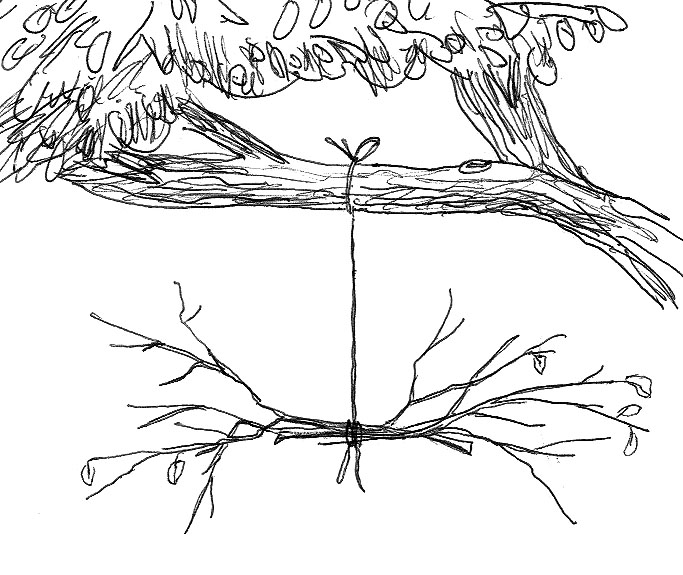
A bait branch bundle is an amazing way to collect twig borers. These are some of the most diverse bark and ambrosia beetles. Make sure you use a meaningful host host. Ideally you would want to pull it up to the canopy, or at least get it off the ground, but not in direct sunlight. The bigger bundle the better! The one on this picture is pretty small.
Beetle Keys

Posted on April 10, 2013 by adamblack in Beetles

Fact Sheet Fusion

Picture format

  • tiff with LZV compression or a high quality jpg.
  • 750px wide, height is unimportant but a consistent height within a taxon is an aesthetic benefit
  • specimens directed to the left
  • white background, if possible
  • both dorsal and lateral aspects, plus one or two diagnostic characters

Microtome Dissection

Posted on April 10, 2013 by adamblack in Beetles

Fixating

For visualizing mandibular mycangia, beetle heads or bodies should be fixed in 96% ethanol, immersed in 30% hydrogen peroxide for 24 h, and embedded in paraffin.

Microtome

Preparates can be sectioned on a microtome at 5 μm and stained with hematoxylin (to emphasize nuclei in fungi) and eosin (to visualize proteins, muscles, and other beetle tissue).

Important points

  1. The immersion in hydrogen peroxide is critical for softening beetle exoskeleton and to avoid fracturing.
  2. The angle of beetle immersion in the wax is also critical. It depends on what mycangia you are interested in, what angle you want to slice them, and what is the angle of attachment of the wax sample to your microtome. You may need to play with the beetle position as the wax is hardening.

Beetle Cleaning

Posted on April 10, 2013 by adamblack in Beetles

Before introducing beetles into new tubes, pass them through several vials with moist kimwipe (all sterile), two days in each vial. This way they empty out their guts, attached spores, and mites. IMPORTANT – poke a hole in the vial lid, otherwise beetles quickly suffocate. No need to rush – the longer the beetles are out of the gallery, the more pure will be their symbiont in the mycangium.

Washing beetles

Prepare:

  • vial with 1ml PBS + 0.1% Tween (one small drop), and
  • vial with 40% EtOH (100% ethanol is too much, even 70%).

1. Drop beetle in PBS, vortex for 15 sec.
2. Take beetle out, put on paper to dry out.
3. Drop beetle in EtOH, keep in for 5 sec.
4. Take beetle out, put on paper to dry out.
5. If beetle is happy and alive, put in tube.
6. Record tube number and beetle species.

Artificial Inoculation

Posted on April 3, 2013 by adamblack in Beetles

Protocol 1

Developed for X. crassiusculus in North Carolina.
Used sweetgum (Liquidambar). Cut out branches ~4cm thick. Autoclave, OR soak in ethanol and then autoclave without drying.
Direct inoculation:
1. Cut end of vial and plug with cotton (control for excessive moisture).
2. Drill shallow holes of equal diameter as vial thread.
3. Screw vial in, with beetle inside.
4. Place log in jar of water, parafilm around.
5. Place in well-lit and well ventilated space.

Indirect inoculation:
1. Parafilm log ends.
2. Drill hole in base of diameter equal to small aquarium tube.
3. Plug tube with cotton and connect tube to water source.
4. Insert in log.
5. Place on a moist paper, in a large screen enclosure.
6. Release beetles in enclosure.

Protocol 2

Cut fresh branch (50 x 5 cm) of sweetgum or maple, seal its exposed ends with parafilm (or wax, or natural latex) to prevent dessication. Prepare containment vials – between 1-3 cm, bottom perforated with many miniature holes, or with one large hole sealed over with wire micromesh (for ventilation – water condensation traps and kills beetles). Soak log for 24 hours in water, remove from water na dry briefly. Drill shallow holes of exactly the diameter of your vial. Place beetle in hole, cover with vial. Keep in humid place. Tupperware with source of water is sufficient. Ventilation is ideal, especially in the beginning of gallery development, but not essential.

For rearing beetle families in twigs: PDC broth (Potato dextrose + 10g casein/L). Tested, but results unclear. Some beetles emerged, not many.

Lab Equipment

Posted on April 3, 2013 by adamblack in Miscellaneous

DNA Equipment

Item Company/Item Name Catalog Number Assessment
PCR Hood CBS Scientific P-030-202
Vortex Adaptor MoBio: Vortex Adaptor 13000-V1
Centrifuge Fisher: AccuSpin Micro17 75002461
Plate Centrifuge Eppendorf: Centrifuge 543
Gel Imaging System Syngene: GeneGenius Bioimaging System
Plate Reader for PicoGreen Molecular Devices: SpectraMax M2
Gradient Thermocycler Labnet: MultiGene Gradient TC9600-6
96 Sample Gel Rig Fisher Scientific: FisherBiotech Electrophoresis Systems-Recirculating Large Horizontal System FB-SBR-2025

DNA Consumables

Item Company/Item Name Catalog Number Assessment
agarose VWR BDH4098-100G
loading dye Promega on Fisher PRG188
96-well plate sealing mats with mini pegs useless

Entomology Equipment

Item Company/Item Name Catalog Number Assessment
light trap battery Eagle Picher carefree non spillable plus car socket adaptor
forceps Roboz http://shopping.roboz.com/micro-scissors-micro-forceps-groups/Dumont-number-5-forceps RS-5063
forceps Bioquip http://www.bioquip.com/Search/DispProduct.asp?pid=4522 4523
forceps Bioquip http://www.bioquip.com/Search/DispProduct.asp?pid=4522 4524

Other

Item Company/Item Name Catalog Number Assessment

Symbiont Diversity

Posted on April 3, 2013 by adamblack in Uncategorized

Objectives

To figure out if ecologically succesful beetles have different fungal associated than less usccesful native ones.

Two approaches (=papers): Broad Sample of many species from many localities using simple culturing, and a Deep Sample targeting just a few species from a few localities, but environmental sequencing using SSU amplification and 454 sequencing.

We also need to do a test isolation from the gut, to see if other interesting fungal species appear!

Broad Sample

Localities: MA, NC, FL, hopefully MS or TX

Targeted species, Should be common and widespread.

Species Note
Xylosandrus crassiusculus exotic
Xylosandrus germanus exotic
Anisandrus sayi native
Monarthrum mali native
Xyleborus ferrugineus native, mostly conifers
Xyleborus affinis native
Dendroctonus frontalis native, conifers
Ambrosiodmus rubricollis exotic
Xyleborinus saxeseni old time invasive, possibly native

Steps

1) collect targeted species, either in logs and rear out, or directly from the logs in the field, or from traps. Trapping likely more efficient in the spring. Targetting three collections of each species at each locality, at least two individuals of each species, ideally from diferent host species. The best would be to get conspecifics from both conifers as well as angiosperms. If there is any host-dependent variatioin in the symbiont, it would be there. Good species for that are X. ferrugineus, X. affinis, and X. saxeseni – frequently attacking any kind of hosts.

2) extract fungi from a) mycangium, b) the gut and c) surface-wash of the beetle.

3) save the beetle voucher for future genotyping (congruence between beetle relatedness and fungus community similarity)
(FL locality key: Palatka 1 – Palatka, FL; Palatka 2 – Savannah (pine); Welaka 1 – Myrtle B.; Welaka 2 – Lumber R.)

Deep Sample

Up to five beetles, representatives from different localities and hosts, or important species even if samples are limited, careful isolation from mycangia, and sequencing SSU library with 454.

Targeted species

Species reason Locality
Xylosandrus crassiusculus exotic
Xyleborus ferrugineus native, any host, Norris did experiments on it in the 60s
Xyleborus affinis native, closely related to ferrugineus – which one is better?
Dendroctonus frontalis native, conifers, SE USA only, but politically super important, and lots of work done on it
Xyleborus glabratus exotic, limited distribution, but super important right now
Xylosandrus germanus exotic pest, related to crassiusculus – good comparison, Northern species – role of climate

Sampling

Species locality available
crassiusculus Ghana 5
crassiusculus SC redbay 5
crassiusculus NC sweetgum 5
crassiusculus NC redbud 5
crassiusculus PNG 5
crassiusculus TH 5
crassiusculus JP 5
ferrugineus Ghana 5
ferrugineus FL redbay 5
ferrugineus FL pine 5
ferrugineus PNG 5
ferrugineus GY 5
frontalis FL 5
frontalis AZ 5
affinis FL pine 5
affinis FL redbay 5
affinis Ghana 5
affinis PNG 5
affinis TH 5
affinis JP 5
glabratus FL redbay 3
glabratus SC 3
glabratus JP 0
glabratus FL avocado 0
germanus NC 3
germanus WI 3
germanus JP 0

Lab Guidelines

Posted on April 3, 2013 by adamblack in Miscellaneous

Hi labmates,

My goal for this lab is that everybody has fun with science, is productive, and ends up being competitive on the job market. To make sure that everyone can work towards these goals, here are expectations for all members of the lab.

Everybody

  • Always label all your samples. Unlabeled samples are automatically discarded.
  • Senior folks are expected to mentor junior ones (occasionally, within reason).
  • No music or radio in shared work spaces please. You are always welcome to use headphones, of course.
  • When you are at work, work! Please no on-line shopping, etc.
  • Anyone is welcome to use the lab vehicle for work-related travel, but you have to reserve it on the Google calendar.

People with PCards

  • If you were given the right to spend our grant money, you also have the duty to take care of the paperwork. Specifically, the person who makes a purchase is responsible for filling out the PCard form (except for the project number). Paloma, Adam or me fill out the project number and sign off as the funding source. The person who made the purchase submits both the PCard form and the signed receipt to the accountants.
  • If you are refilling a consumable that we routinely use, go ahead and buy it, but it’s always a good idea to clear it with Adam. If you are buying something new that we have not used before, please always consult with me or Adam.
  • Travel: if you have a PCard, you were given the right but also the duty to organize your travel. So most people are responsible for filling out their own TA and TER. Paloma or me will fill in the project number and sign. In special cases (no PCard, or complicated travel) Paloma will be happy to help with everything, but not on a regular basis.

Undergrads

  • Maintain your updated schedule on Google Calendar.
  • Spend the last 20 minutes of every week washing dishes and cleaning up.

Grad students

  • This is the real structure of your appointment: 10% doing something good for the broader lab (website, mentoring, clean-up…); 10% doing something good for the Department (seminars, volunteering…we have to make sure the department likes us), and 80% working on your research.
  • Strive for balance and productivity: figure out how you work best, and don’t forget to go out and play. When or where you work is up to you, but I expect on average at least 40 hours/week of active work, reading, writing, or thinking.
  • Leave or travel is fine, but make up for it.
  • A progress report every half year (usually a presentation).
  • Application for some funding every year (not necessarily the first year).
  • You will have your first manuscript written on the third year at the latest (I will help you with it).
  • Master at least one of the following: a relational database software, a computer language, or some important statistical approach, ideally in R.
  • Please give credits and co-authorships generously.
  • Be a dues-paying member of at least one professional society.
  • Keep extensive notes in lab notebook! It may seem like a waste of time initially, but it’s absolutely essential for troubleshooting.

Postdocs

  • This is the real structure of your appointment: 10% working on your own stuff, 20% doing something good for the broader lab (particularly mentoring), and 70% working on your primary project. In reality though, postdocs should work with 150% commitment, and not because of me but because of the job market competition :).
  • You will initiate writing your first manuscript in the first half year, and have it ready for submission at the end of the first year at the latest.
  • You have the right to be the first author on all papers that you are mostly responsible for, I am the last author.
  • Keep stellar lab records.

Jiri, the PI

  • Will provide reference letters anytime upon request.
  • Will work with you on your grant applications.
  • Will grant co-authorship to everybody who contributed something without which a paper wouldn’t exist, and first authorship to whoever did the most work or wrote most of the paper. I will usually be the last author on papers generated in this lab.
  • Will provide career advice and work advice anytime upon request.
  • Will immediately inform about any funding and employment change for individual students.
  • Will present a lab plan, including funding news, every half year.

Thank you!
Jiri

Other Information

Posted on April 3, 2013 by adamblack in Miscellaneous

codes

  • ACF gate: #9044
  • Lab car number 4722
  • Basement lock 8910
  • Ricoh copy machine: 12345
  • compound storage cage: PATH

shipping

For courier, provide Cindy this information:

  • Name and address
  • Account number from which it’s paid (can use my startup, # 95589)
  • Approximate weight
  • Content description

Our address for courier delivery:
Jiri Hulcr
UF School of Forest Resources and Conservation
1745 McCarty Drive
Gainesville, FL 32611

Our FedEx account number:
120405926

Our address for regular mail:
University of Florida
School of Forest Resources and Conservation
PO Box 110410
Gainesville, FL 32611

References

Posted on April 3, 2013 by adamblack in Uncategorized

(in progress)

  1. Cafaro, M.J. & Currie, C.R. (2005) Phylogenetic analysis of mutualistic filamentous bacteria associated with fungus-growing ants. Canadian Journal of Microbiology, 51, 441–446.
  2. Chen, H.-H., Qin, S., Li, J., Zhang, Y.-Q., Xu, L.-H., Jiang, C.-L., Kim, C.-J., & Li, W.-J. (2009) Pseudonocardia endophytica sp. nov., isolated from the pharmaceutical plant Lobelia clavata. International Journal of Systematic and Evolutionary Microbiology, 59, 559–563.
  3. Collado, J., Platas, G., Paulus, B., & Bills, G.F. (2007) High-throughput culturing of fungi from plant litter by a dilution-to-extinction technique. FEMS microbiology, ecology,60, 521–533.
  4. Crawford, D.L., Lynch, J.M., Whipps, J.M., & Ousley, M.A. (1993) Isolation and Characterization of Actinomycete Antagonists of a Fungal Root Pathogen. Applied And Environmental Microbiology, 59, 3899-3905.
  5. Fraedrich, S.W., Harrington, T.C., Rabaglia, R.J., Ulyshen, M.D., Mayfield, A.E., Hanula, J.L., Eickwort, J.M., & Miller, D.R. (2008) A fungal symbiont of the redbay ambrosia beetle causes a lethal wilt in redbay and other Lauraceae in the southeastern United States. Plant Disease,92, 215-224.
  6. Hayakawa, M. & Nonomura, H. (1989) A new method for the intensive isolation of actinomycets from soil. Actinomycetologica, 3, 95-104.
  7. Hijii, N., Kajimura, H., Urano, T., Kinuura, H., & Itami, H. (1991) The mass mortality of oak trees induced by Platypus quercivorus (Murayama) and Platypus calamus Blandford (Coleoptera: Platypodidae): the density and spatial distribution of attack by the beetles. Journal of the Japanese Forestry Society, 73, 471-476.
  8. Kirkendall, L.R. (2006) A New Host-Specific, Xyleborus vochysiae (Curculionidae: Scolytinae), from Central America Breeding in Live Trees. Annals of the Entomological Society of America, 99, 211-217.
  9. Kolarik, M. & Hulcr, J. (2008) Mycobiota associated with the ambrosia beetle Scolytodes unipunctatus (Coleoptera: Curculionidae, Scolytinae). Mycological research, 113, 44-60.
  10. Scott, J.J., Oh, D.C., Yuceer, M.C., Klepzig, K.D., Clardy, J., & Currie, C.R. (2008) Bacterial protection of beetle-fungus mutualism. Science, 322, 63.
  11. Six, D.L. & Bentz, B.J. (2007) Temperature Determines Symbiont Abundance in a Multipartite Bark Beetle-fungus Ectosymbiosis. Microbial Ecology, 54, 112-118.
  12. Taechowisan, T., Peberdy, J.F., & Lumyong, S. (2003) Isolation of endophytic actinomycetes from selected plants and their antifungal activity. World Journal of Microbiology and Biotechnology, 19, 381–385.
  13. Tanahashi, M., Matsushita, N., & Togashi, K. (2009) Are stag beetles fungivorous? Journal of Insect Physiology, in press.
  • 1
  • 2
  • 3
  • 4
  • 5

(c) 2013 Ambrosia Symbiosis Lab Protocols

Cleantalk Pixel